General Information
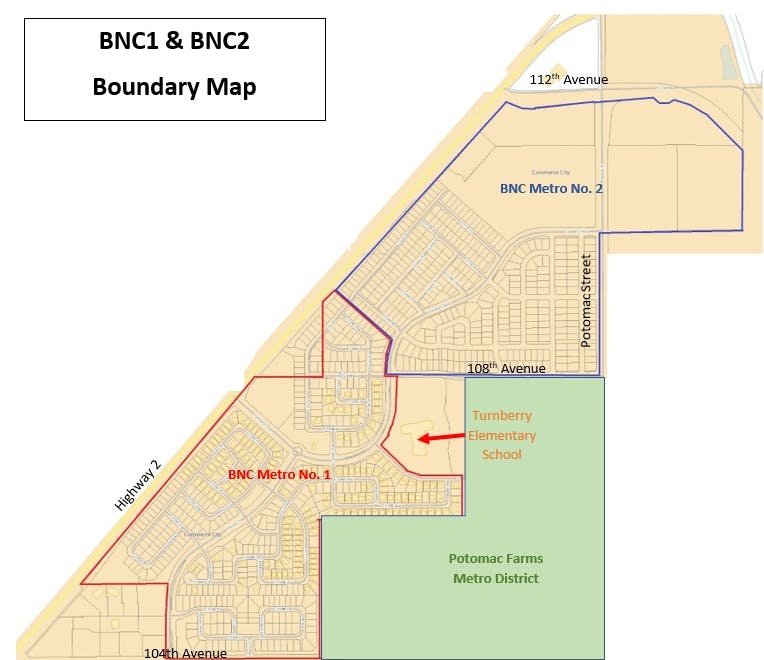
BNC Metropolitan District No. 1 (District), a quasi-municipal corporation and political subdivision of the State of Colorado in Adams County, was organized on November 30, 2000, and is governed pursuant to provisions of the Colorado Special District Act (Title 32). The District operates under service plan approved by Commerce City (City) in August 2000, as amended in September 2003. The District was established to provide financing for the design, acquisition, construction and installation of streets, traffic and safety controls, park and recreation facilities, water facilities, sanitary and storm drainage improvements and mosquito control services within the District.
The land within the District is fully developed and the District’s service is comprised of over 480 single family homes. All parks and open spaces within the District’s boundaries (approximately 18.9 acres) are owned and maintained by the District.
District Revenue Sources
In order to fund the repayment of its bond debt and provide neighborhood services to the Outlook residents, the District generates revenue from the following sources:
Property Taxes: Each year, the District assesses property taxes on the homeowners living within the District. Property tax assessments is the District's primary source of revenue and currently comprises approximately 92% of the District's total annual revenue. In November 2000, voters approved the District's ballot issue, which authorized the District to change the mill levy rate each year without obtaining further approval from the voters. However, the District is prohibited from generating annual property tax revenue in excess of $500,000 to fund the District's operations.
Interest Income: State laws restrict the types of funds in which the District may invest its cash. For the past several years, the District's investment income has been an insignificant source of revenue to the District due to the decline in interest rates paid by banks on savings accounts and certain low-risk money market funds.